
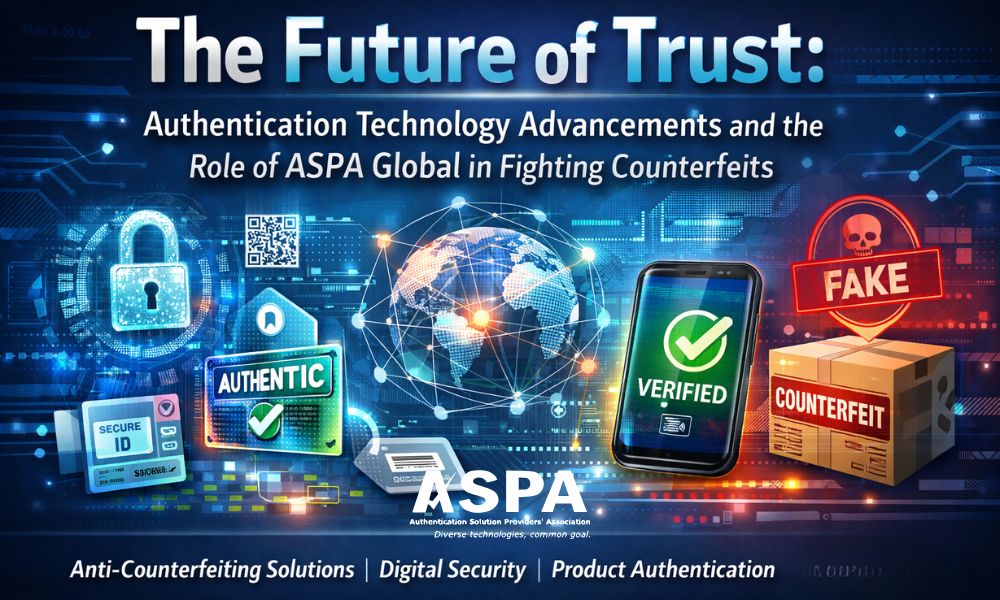
In a world where digital and physical markets are increasingly intertwined, the battle against illicit trade has reached a fever pitch. Authentication Technology Advancements are no longer just optional security features; they are the frontline defense for global commerce in 2026. As counterfeiters adopt generative AI to create “super fakes” and clone websites with terrifying precision, the role of organizations like the ASPA (Authentication Solution Providers’ Association) has become pivotal. ASPA Global serves as a self-regulated body that bridges the gap between technology innovators and brand owners, ensuring that authentication standards evolve as fast as the threats they aim to neutralize.
How Is Authentication Technology Evolving to Fight Counterfeiting?
The evolution of anti-counterfeiting technology is shifting from reactive “check-points” to proactive, data-driven ecosystems. In 2026, we see a convergence of physical security and digital intelligence.
- AI-Powered Visual Inspection: Brands now use advanced AI tools to analyze packaging textures, microscopic printing errors, and serial number patterns that are invisible to the human eye.
- Blockchain-Backed Traceability: By creating an immutable digital twin for every physical product, blockchain ensures that a product’s journey—from the factory floor to the consumer’s hands—is recorded on a tamper-proof ledger.
- Smart Packaging with IoT: Internet of Things (IoT) sensors are now embedded in high-value goods. These sensors monitor location, temperature, and even “tamper-events” (like if a seal is broken) in real-time.
- Cryptographic QR Codes: Unlike standard QR codes that can be easily copied, modern cryptographic codes change or expire after a certain number of scans, preventing “code reuse” by counterfeiters.
Why Are Advanced Authentication Technologies Becoming Essential for Brands?
For modern brands, the cost of a single counterfeit incident extends far beyond lost revenue; it strikes at the heart of consumer trust.
1. Protecting Brand Equity
When a consumer unknowingly purchases a “super fake” that fails or causes harm, they blame the brand, not the counterfeiter. Advanced authentication allows brands to reclaim their narrative by proving authenticity instantly.
2. Regulatory Compliance and Safety
In sectors like pharmaceuticals and agrochemicals, the stakes are life and death. The ASPA Global organization emphasizes that standardized authentication isn’t just about profit—it’s about public safety. Global regulations now often mandate serialization to prevent the entry of substandard goods into the supply chain.
3. Data-Driven Insights
Smart authentication solutions provide brands with “crowd-sourced” intelligence. Every time a consumer scans a product to verify it, the brand receives data on where their products are being sold and where “hotspots” of fake activity might be emerging.
What Are the Latest Innovations in Product Authentication Technology?
Innovation in 2026 is defined by “Phygital” (Physical + Digital) security. Below are the cutting-edge tools currently disrupting the counterfeit market:
- DNA Taggants: Microscopic, unique molecular sequences (similar to biological DNA) are infused into inks or materials. These are virtually impossible to replicate and can be verified using portable field scanners.
- Digital Watermarking: These are imperceptible patterns embedded into packaging artwork. Even if a counterfeiter takes a high-resolution photo of the box, the digital “noise” that carries the authentication data does not carry over to the fake.
- Adaptive Multi-Factor Authentication (MFA): Just as we use MFA for banking, products now use it too. A consumer might scan a QR code (Something you have) and then be asked to verify a hidden code under a scratch-off layer (Something you know).
- Quantum-Resistant Encryption: As computing power grows, ASPA members are already piloting hybrid cryptographic systems that are resistant to future quantum-hacking attempts.
How Do Smart Authentication Solutions Protect Consumers and Businesses?
The beauty of modern authentication lies in its simplicity for the end-user while maintaining extreme complexity for the fraudster.
| Feature | Protection for Businesses | Protection for Consumers |
| Tamper-Evident Seals | Prevents “product switching” or dilution in the supply chain. | Ensures the product is “factory fresh” and safe. |
| Real-Time Alerts | Notifies the brand if a batch is scanned in an unauthorized region. | Provides a “Deterministic Yes/No” answer on product genuineness. |
| Secure Mobile Apps | Builds a direct marketing channel with verified buyers. | Offers access to warranties, loyalty points, and user guides. |
| Geofencing | Identifies leaks in the distribution network. | Confirms the retailer is an authorized seller. |
The Role of ASPA Global in the Ecosystem
The Authentication Solution Providers’ Association (ASPA) plays a critical role by promoting the adoption of these technologies. By setting the “Hologram Safety and Security Management Standards” and collaborating with bodies like Interpol and ISO, ASPA ensures that technology providers adhere to a strict code of conduct. This global network makes it harder for criminals to find “weak links” in the international trade chain.
Conclusion: The Future of Digital Trust
As we move through 2026, the goal of Authentication Technology Advancements is to create a world where “trust” is built into the product itself. Through the collaboration of technology innovators and oversight organizations like ASPA Global, brands can finally move from a reactive stance to a proactive “Authenticity First” model.
For businesses, the message is clear: if you aren’t authenticating, you’re speculating with your brand’s future.

